

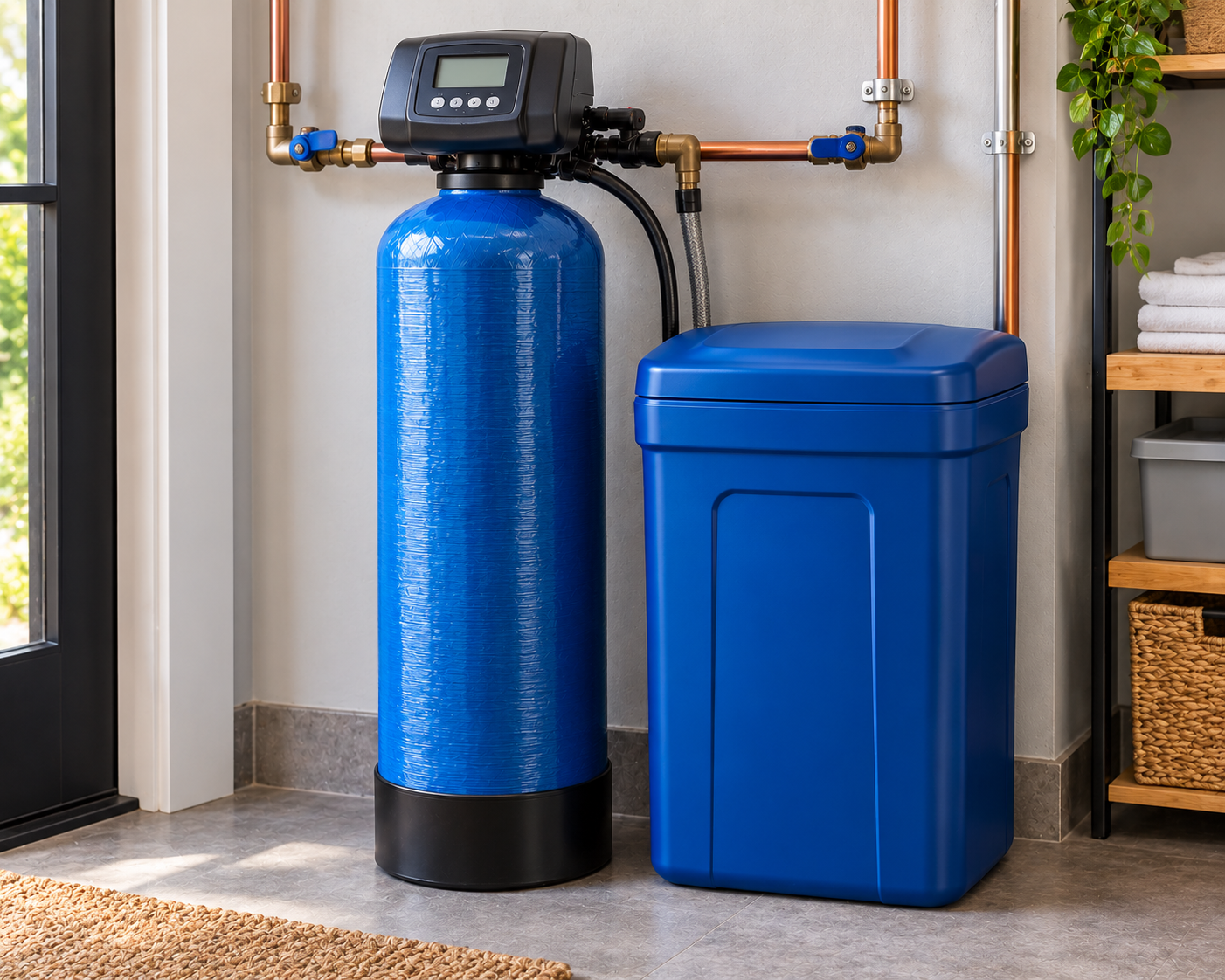
Do water softeners use a lot of electricity?
No, most water softeners do not use a large amount of electricity. Power typically supports the control valve, timer, and controls that manage regeneration. Consumption varies by model and household use, but electricity is usually a minor operating factor compared with salt, water use, and maintenance in The Phoenix Valley.
What Uses Electricity in a Water Softener?
A conventional water softener uses electricity primarily to manage its operation. Depending on the model, that can include an electronic display, a timer, a water usage meter, and a motor that moves the control valve between operating stages.
The softening process itself works through an exchange of minerals within the resin tank. Electricity supports the controls that coordinate this process rather than continuously powering a large heating element or compressor. That distinction helps explain why most residential softeners have modest electrical needs.
During regeneration, the system refreshes the resin so it can continue removing hardness minerals. Electrical components control when the cycle begins and how the valve moves through its stages. Water pressure generally moves water through the system.
For homeowners in The Phoenix Valley, understanding these functions can make equipment specifications easier to interpret. A powered display or an automatic regeneration feature does not, by itself, indicate high electricity consumption.
What Affects Water Softener Electricity Use?
Electrical consumption depends on the equipment and how it operates. Different models have different control designs, standby requirements, and regeneration settings. A system with additional powered features may use electricity differently from a simpler model.
Household water use also affects operation. When more softened water is needed, the system may need to regenerate more frequently. Incoming water hardness, resin capacity, and programming help determine how often that happens.
Some systems regenerate according to a preset schedule. Others use measured water consumption to determine when regeneration is needed. These approaches affect cycle frequency, although they do not establish an exact electricity figure without the model’s specifications.
Useful details to review with a water treatment professional include:
- The system’s electrical requirements and stated power consumption.
- Whether regeneration follows a schedule or measured water use.
- How capacity and settings match the household’s needs.
- Whether accessories have separate electrical requirements.
An electrical rating alone may not describe actual daily consumption. The amount of time each component operates also matters.
Why Do Salt, Water Use, and Maintenance Matter More?
For most conventional residential water softeners, electricity is a relatively small part of ongoing operation. Salt replenishment, regeneration water, and maintenance usually deserve more attention when evaluating how the system fits a household.
Salt supports regeneration by providing the brine used to refresh the resin. The amount required depends on the system’s design, settings, incoming hardness, and demand for softened water. Electricity use does not reveal whether salt use is appropriate.
Regeneration also uses water. A system that regenerates more often than necessary can have different operating requirements from one correctly matched to the household. Proper sizing and programming therefore matter beyond electrical consumption.
Maintenance supports reliable performance. A professional assessment can consider valve operation, regeneration settings, and whether the equipment continues to meet the home’s needs.
For a household in The Phoenix Valley, reviewing electrical requirements is useful, but it should be part of a broader assessment. Homeowners can discuss their water conditions and usage with a professional before deciding which equipment is appropriate.
FAQ
Does a water softener use electricity all day?
Many electric models keep their controls powered throughout the day. However, standby operation differs from active valve movement during regeneration, so continuous connection does not mean constant high consumption.
Does regeneration require a lot of electrical power?
Regeneration generally uses electricity to operate controls and move the valve through its stages. Actual consumption depends on the model and cycle frequency, so equipment specifications provide the clearest guidance.
Are all water softeners electrically powered?
No. Some water softeners use non-electric controls powered by water flow. Their operating requirements differ, so electrical use should be checked for the specific system being considered.
Can a larger household affect water softener electricity use?
Greater water use may increase regeneration frequency, depending on hardness, capacity, and settings. This can affect electrical consumption, although electricity generally remains a minor operating consideration.
Do water softeners use a lot of electricity?
No, most water softeners do not use a large amount of electricity. They typically require power mainly for the control valve, timer, and regeneration cycle. Actual consumption varies by model and household use, but electricity is usually a minor operating factor compared with salt, water use, and maintenance in The Phoenix Valley.
Conclusion
Most water softeners use modest amounts of electricity to support controls, timing, and regeneration. The specific model and household demand determine consumption, while salt, regeneration water, and maintenance usually play a larger role in ongoing operation.