

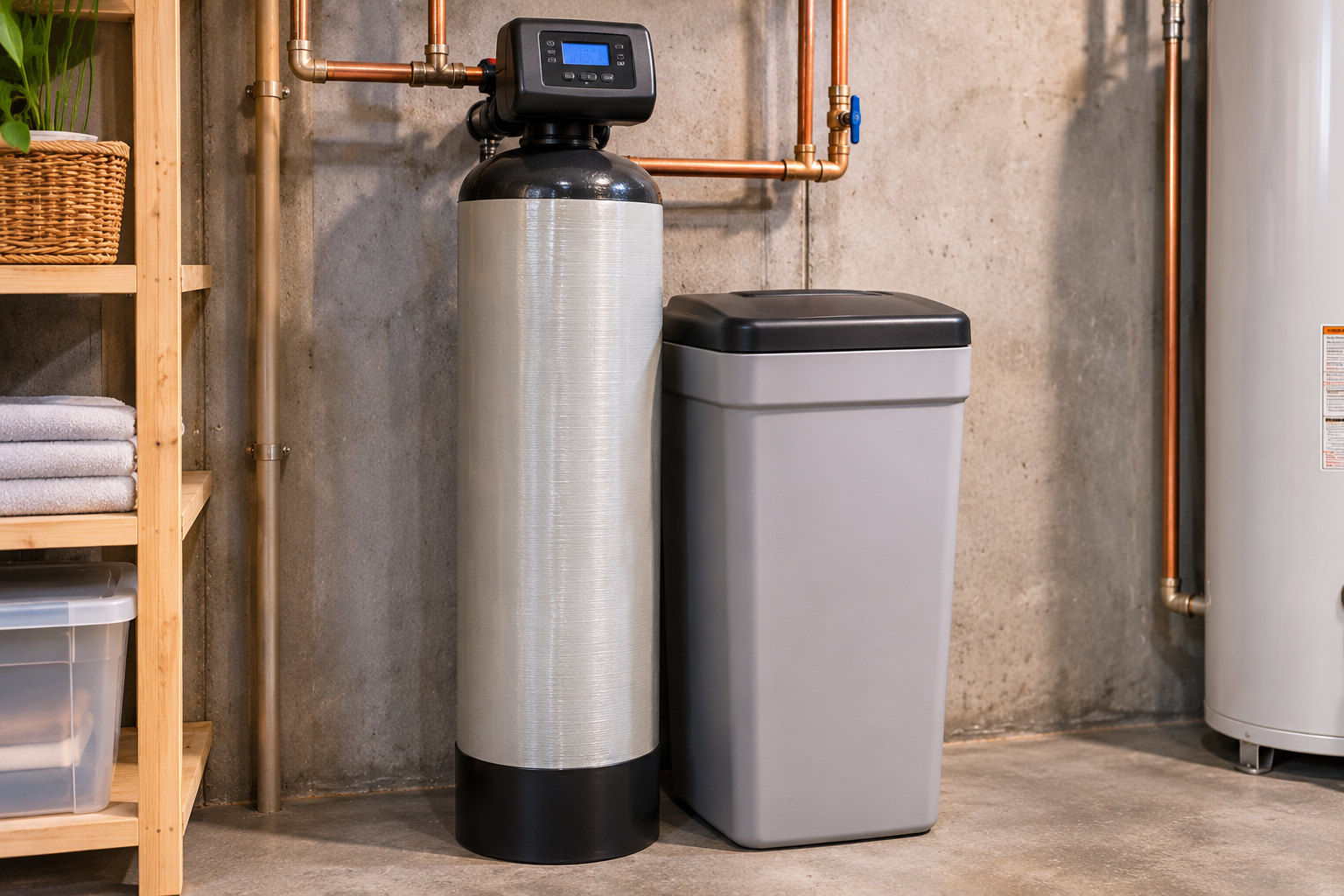
Do I need a plumber to install a water softener?
You do not always need a plumber to install a water softener, but professional installation is often recommended. Some homeowners can install a water softener themselves if their home already has compatible plumbing connections and they have the necessary experience. However, installing new water lines, connecting drainage, or meeting local plumbing requirements may require professional assistance. For homeowners in the Phoenix Valley, the best choice depends on the home’s existing plumbing, the water softener model, and local installation requirements.
Water Softener Installation
Installing a water softener involves more than connecting a unit to the home’s water supply. The system must be properly positioned, connected to the correct water lines, and configured to deliver softened water throughout the intended areas of the home. Proper installation helps the equipment operate efficiently and reduces the risk of leaks, drainage problems, and unnecessary maintenance.
Homeowners with an existing water softener loop may have a simpler installation process because the plumbing connections are already available. However, those connections must still be compatible with the new equipment. Homes without a dedicated softener loop may require modifications to the existing plumbing system.
For homeowners in the Phoenix Valley, hard water is a common concern. A properly installed water softener can help reduce hardness minerals that contribute to scale buildup on fixtures, appliances, and plumbing components.
Before deciding whether to install a water softener yourself, review the manufacturer’s installation instructions, evaluate the existing plumbing, and determine whether professional assistance is needed.
Water Line Connections
A water softener must connect to the home’s plumbing system so that water passes through the equipment before reaching the fixtures and appliances intended to receive softened water. Correct inlet and outlet connections are essential for proper operation.
Installation generally requires connecting the softener to the incoming water supply at an appropriate location. Depending on the home’s plumbing layout, this may involve installing fittings, connecting supply lines, or modifying existing pipes. The system must also be accessible for maintenance and future servicing.
An existing softener loop can simplify the process, but homeowners should verify that the connections match the equipment’s requirements. Incorrectly sized fittings, reversed connections, or poorly secured water lines can affect performance and increase the risk of leaks.
If installation requires cutting into water lines, relocating plumbing connections, or making significant modifications, hiring a qualified plumber is generally the safer option. Professional installation can help ensure the connections are secure and appropriate for the home’s plumbing system.
Drain And Bypass Arrangements
A water softener needs more than a connection to the water supply. Many conventional salt-based systems also require a properly installed drain line to discharge wastewater during regeneration cycles.
The drain connection must follow the manufacturer’s instructions and applicable plumbing requirements. Depending on the installation, an approved air gap or other backflow protection may be necessary to prevent contaminated drain water from entering the system. Improper drainage can lead to leaks, backups, or sanitation concerns.
A bypass valve is another important installation component. It allows water to bypass the softener when the equipment needs maintenance, repairs, or servicing. Many water softeners include a built-in or manufacturer-supplied bypass assembly, but the arrangement must be installed and operated correctly.
Homeowners in the Phoenix Valley should verify that the installation location provides suitable drainage, adequate service access, and room for the equipment. When the home lacks an appropriate drain connection or the existing arrangement is uncertain, a qualified plumbing professional can help determine the proper installation approach.
Installation Planning
Before installing a water softener, homeowners should evaluate their water hardness, household water usage, available installation space, and existing plumbing connections. These factors help determine which system is appropriate and whether professional installation is necessary.
A water hardness test can help establish the level of hardness minerals in the home’s water. This information, along with household water demand, can help determine the appropriate system capacity and settings. Choosing equipment that fits the home’s needs is important for consistent performance and efficient operation.
The installation location should also be considered. Most conventional water softeners require access to the water supply, an appropriate drain connection, and sufficient space for maintenance and adding salt. Some models also require a nearby electrical outlet.
For homeowners in the Phoenix Valley, planning should include checking the existing plumbing configuration and any applicable municipal installation or permit requirements. Local requirements may vary depending on the property and the work involved.
If the home already has compatible connections, an experienced homeowner may be able to complete a straightforward installation by following the manufacturer’s instructions. However, when plumbing modifications, drainage changes, or uncertain connections are involved, professional installation is generally the more practical choice.
FAQ
Do I need a plumber to install a water softener?
A plumber is often the safest choice for installing a water softener, especially when plumbing modifications, a drain connection, or local requirements are involved. Some straightforward installations may be suitable for experienced DIY homeowners. Review the specific conditions and the manufacturer’s guidance before choosing a system or changing your routine.
Can I install a water softener myself?
Yes, some homeowners can install a water softener themselves, particularly when the home already has compatible plumbing connections and an appropriate drain. However, the installation must follow the manufacturer’s instructions and applicable plumbing requirements. If new water lines or drainage modifications are needed, professional assistance is recommended.
Does a water softener need a drain connection?
Most conventional salt-based water softeners require a drain connection to discharge wastewater during regeneration. The drain must be installed according to the manufacturer’s specifications and applicable plumbing requirements, including backflow protection where required. An improper drain connection can create drainage and sanitation problems.
Do I need a plumber if my house already has a water softener loop?
Not necessarily. An existing softener loop may make installation easier because the plumbing connections are already in place. However, homeowners must still confirm that the loop, fittings, and drainage are compatible with the new equipment. A plumber can help when connections need modification or the existing setup is uncertain.
When should I hire a professional to install a water softener?
Professional installation is recommended when the home requires new plumbing connections, modifications to existing water lines, or a new drain arrangement. A qualified plumber can also help address installation requirements, identify potential plumbing concerns, and ensure the equipment is properly connected.
Conclusion
You do not always need a plumber to install a water softener, but the right decision depends on your home’s plumbing configuration, the equipment requirements, and your experience with plumbing installations. An existing softener loop may make DIY installation possible, while new water line connections, drainage changes, or local requirements can make professional assistance the better option.
For homeowners in the Phoenix Valley, properly installing a water softener can help manage hard water and reduce mineral buildup throughout the home’s plumbing system.