
What is the average life expectancy of a water softener?
A water softener commonly lasts about 10 to 15 years, although its actual service life depends on water quality, household usage, maintenance, and equipment condition. Regular salt checks, cleaning, and professional inspections can support dependable operation. In The Phoenix Valley, hard water conditions make consistent maintenance especially important.
How Long Do Water Softeners Usually Last?
A typical water softener can remain operational for approximately 10 to 15 years. This range is a useful guideline, but it does not mean every system will require replacement as soon as it reaches its tenth year. Some well-maintained units may continue working reliably beyond this range, while equipment exposed to demanding conditions may develop problems sooner.
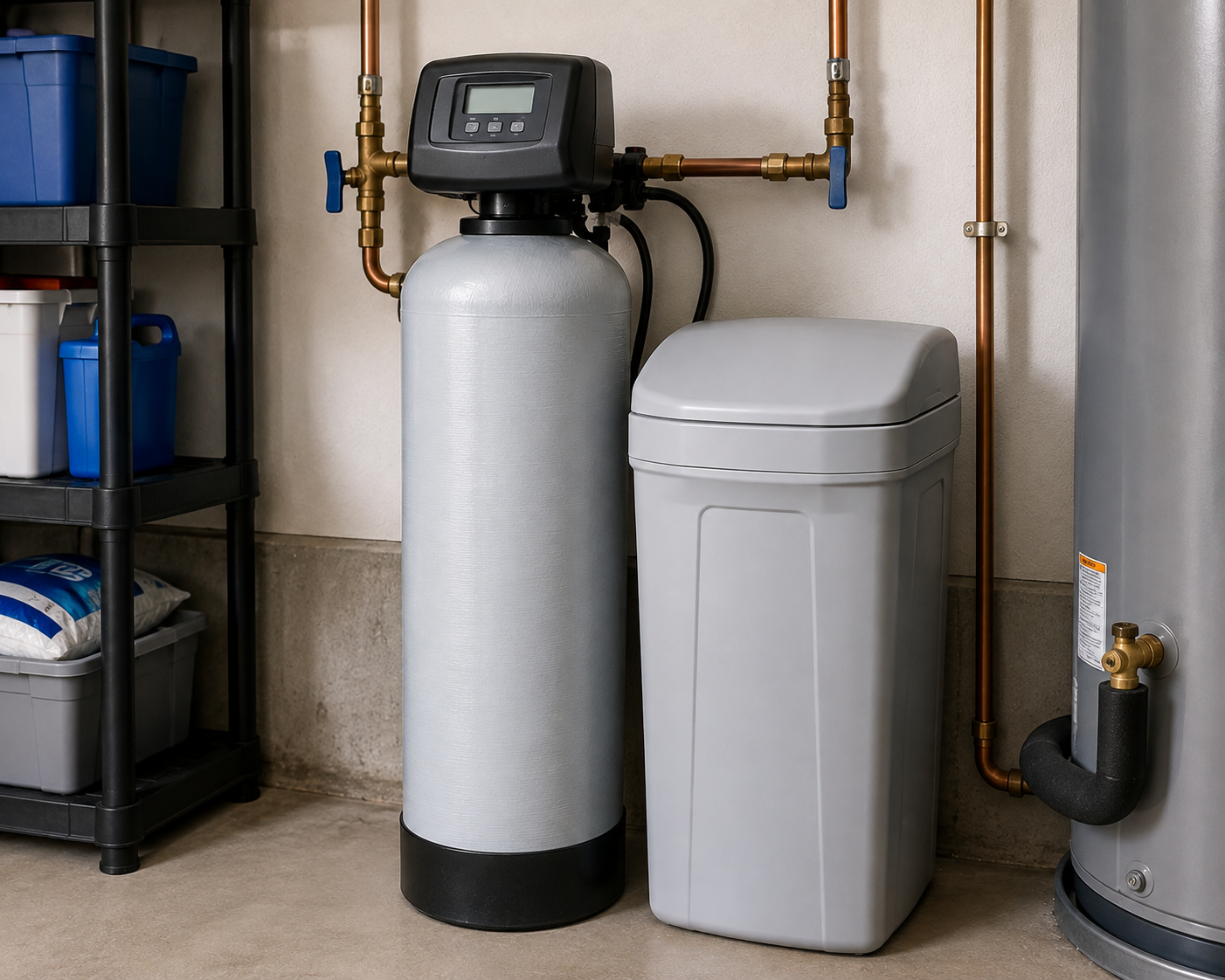
A water softener removes hardness minerals from a home’s water through a process called ion exchange. During normal operation, the system repeatedly treats water, regenerates its resin bed, and draws salt solution from the brine tank. The condition of these components and the demands placed on them influence how long the equipment remains effective.
Age alone should not determine whether a system needs replacement. Its current performance, repair history, and overall condition provide a more complete picture. A professional inspection can help determine whether maintenance, repair, or replacement is the most practical next step.
What Factors Affect a Water Softener’s Service Life?
Several conditions can shorten or extend the useful life of a water softener:
- Water quality: The concentration of hardness minerals and the presence of sediment or other substances affect how much work the system must perform.
- Household water usage: A larger household or one with high water consumption places greater demand on the softener.
- System sizing: Equipment that is too small for the household may regenerate frequently and experience unnecessary wear.
- Maintenance habits: Salt checks, brine tank cleaning, and routine inspections help identify problems before they interfere with performance.
- Equipment condition: Aging valves, controls, seals, and resin can affect how consistently the system treats water.
- Installation quality: Proper configuration and setup help the softener regenerate according to the home’s actual water conditions and usage.
Homes in Mesa, Arizona often manage noticeably hard water. Because the softener may operate regularly under these conditions, homeowners should pay attention to changes in water feel, scale formation, salt consumption, and regeneration behavior.
What Are the Signs That a Water Softener Is Wearing Out?
A softener does not always stop working suddenly. Performance may decline gradually as components wear or the resin loses effectiveness. Possible warning signs include:
- Scale returning to faucets, fixtures, or shower doors
- Soap becoming more difficult to lather
- Laundry feeling stiff or looking less clean
- Changes in the taste or feel of the water
- Salt levels staying unusually high or dropping unexpectedly fast
- Inconsistent regeneration cycles
- Reduced water pressure associated with the treatment system
- Repeated repairs or recurring operational problems
These symptoms do not automatically mean the entire system needs replacement. A salt bridge, clogged component, control setting, or maintenance issue can sometimes produce similar effects. An evaluation can identify whether the problem is limited to a serviceable component or reflects broader equipment deterioration.
For homeowners in Mesa, Arizona, renewed mineral buildup may be especially noticeable on plumbing fixtures and water-using appliances. Testing the treated water can help confirm whether the softener is still reducing hardness effectively.
How Can Routine Maintenance Support Reliable Operation?
Regular maintenance cannot make equipment last indefinitely, but it can help a water softener operate more consistently throughout its expected service life. Homeowners should check the salt level periodically and use the type of salt recommended for their equipment. The brine tank should also be inspected for salt bridges, accumulated residue, or other conditions that could interfere with regeneration.
Cleaning needs vary according to the system design and local water conditions. Manufacturer instructions should guide routine homeowner maintenance. A professional inspection can assess the control valve, brine system, regeneration settings, resin performance, and visible connections.
In The Phoenix Valley and across Maricopa County, local water conditions may place substantial demands on softening equipment. Matching regeneration settings to actual hardness and household consumption can prevent inefficient operation. When a system approaches 10 to 15 years old, an inspection can also help homeowners compare its current performance with available water treatment services and replacement options.
FAQ
Can a water softener last longer than 15 years?
Yes. Some systems remain effective beyond 15 years when properly sized, maintained, and operated under suitable conditions. Continued performance matters more than age alone.
How do I know whether my water softener needs repair or replacement?
Consider its age, treatment performance, repair frequency, and component condition. A professional inspection can determine whether a specific repair is reasonable or replacement is more practical.
How often should I check the salt in my water softener?
Check it regularly based on household usage and the manufacturer’s instructions. Maintaining an appropriate salt level helps the system complete its regeneration process correctly.
Does hard water make a water softener wear out faster?
Harder water creates greater treatment demand and may require more frequent regeneration. Proper sizing, suitable settings, and routine maintenance can help the system manage that demand reliably.
What is the average life expectancy of a water softener?
A water softener commonly lasts about 10 to 15 years, although actual service life varies with water quality, usage, maintenance, and equipment condition. Regular salt checks, cleaning, and professional inspection can support reliable operation. In The Phoenix Valley, hard water conditions may make routine maintenance especially important.
Conclusion
A water softener generally lasts about 10 to 15 years, but water quality, usage, sizing, maintenance, and equipment condition all affect its actual lifespan. Monitoring performance and addressing developing problems can help homeowners make informed repair or replacement decisions.