
Will reverse osmosis remove radon from water?
No, standard reverse osmosis systems alone do not effectively remove dissolved radon from water because the gas can pass through the membrane. For homes in The Phoenix Valley, water testing can help determine whether radon-specific treatment, such as aeration or granular activated carbon, is appropriate.
Why Doesn’t Standard Reverse Osmosis Remove Radon?
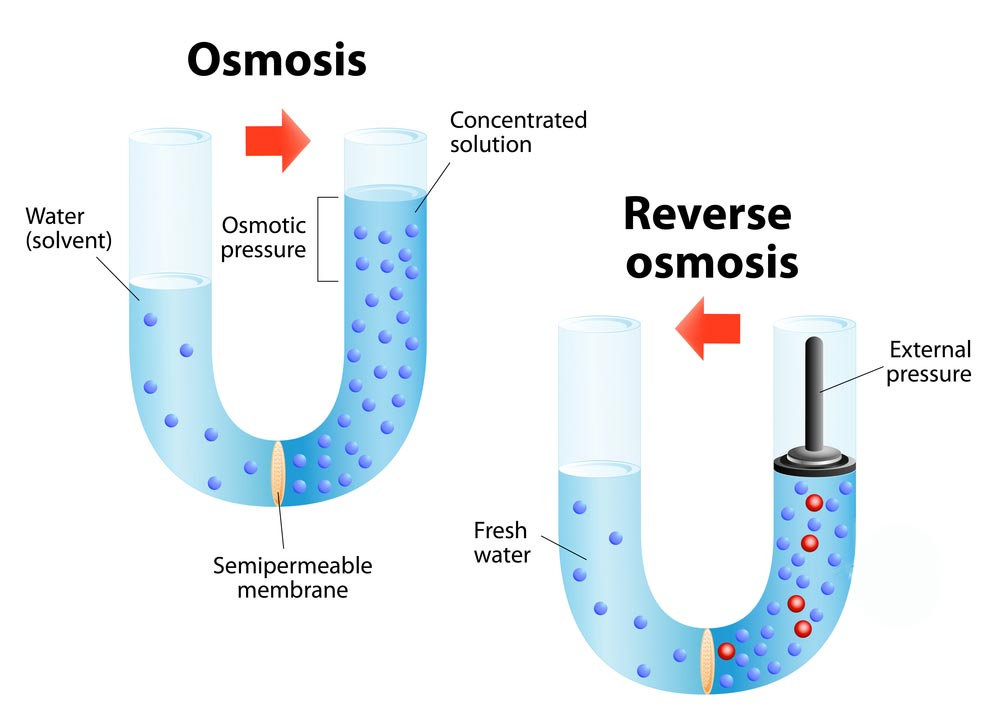
Reverse osmosis uses a membrane to separate certain contaminants from water. However, that membrane does not effectively stop dissolved radon gas. A standard reverse osmosis system can serve its intended treatment purpose while still allowing radon to pass through.
The distinction matters when choosing equipment. A system’s ability to address one water quality concern does not establish that it can address another. When radon is the concern, the treatment method needs to be evaluated specifically for radon removal.
For example, having a reverse osmosis unit installed at a drinking water faucet does not establish that the water has been treated for radon. The presence of equipment and its suitability for a particular contaminant are separate questions.
Similarly, a description such as “whole home water purifier” or “whole house filtration” does not, by itself, confirm radon removal capability. The actual treatment technology matters more than a broad product description.
Standard reverse osmosis alone should therefore not be relied on as a radon treatment method. Understanding this limitation helps homeowners ask more useful questions before selecting or modifying a water treatment system.
What Water Treatment Methods Can Address Radon?
Aeration and granular activated carbon are radon-specific treatment options that may be appropriate depending on water testing results and professional evaluation. They work differently from a standard reverse osmosis membrane.
Aeration separates dissolved radon gas from water by bringing the water into contact with air. The separated gas must be directed outside through an appropriately designed venting arrangement. Evaluating that arrangement is part of assessing the treatment system.
Granular activated carbon, often shortened to GAC, uses carbon media that captures radon as water passes through it. This is a specific treatment application, so the presence of carbon in an ordinary filter should not be treated as confirmation that the filter can address radon.
These options require consideration of more than the equipment name. A professional assessment should connect the measured water conditions with the proposed treatment method, its installation requirements, and its ongoing care.
Useful questions to discuss include:
- Treatment suitability: Why is this method appropriate for the water test results?
- System design: How will the equipment address dissolved radon?
- Installation requirements: What does the proposed treatment arrangement involve?
- Ongoing care: What monitoring or maintenance does the selected system require?
These questions help keep the discussion focused on the specific concern rather than general filtration claims.
Why Should Water Testing Come Before Choosing Radon Treatment?
Water testing helps establish whether radon is present and provides information for evaluating treatment. Owning a reverse osmosis system does not answer either question.
For homes in The Phoenix Valley, the local reference alone does not establish the condition of an individual water supply. Treatment decisions should reflect information about the water being used at that property.
A homeowner considering reverse osmosis installation may have several water quality goals. If radon is among the concerns, it should be identified explicitly during the assessment. That allows the discussion to address whether a separate treatment method is needed.
Testing also helps avoid choosing equipment based only on a general description. Before purchasing a system, explain the concern, share any available water test results, and ask whether the proposed equipment is intended to address dissolved radon.
The practical sequence is to establish the water conditions, evaluate suitable treatment, and understand the selected system’s requirements. This gives water treatment discussions a clear foundation.
FAQ
Can radon pass through a reverse osmosis membrane?
Yes. Dissolved radon gas can pass through a standard reverse osmosis membrane, so the system alone should not be relied on for effective radon removal.
Does whole house filtration automatically remove radon?
No. Whole house filtration describes a treatment arrangement, but it does not confirm radon removal capability. The specific technology must be evaluated for that purpose.
Are aeration and granular activated carbon the same treatment?
No. Aeration separates dissolved gas from water, while granular activated carbon captures radon on carbon media. Water testing and professional evaluation help determine which may be appropriate.
Should I test my water if I already have reverse osmosis?
If radon is a concern, testing can help assess it. Having reverse osmosis equipment does not establish whether radon is present or effectively removed.
Will reverse osmosis remove radon from water?
No, standard reverse osmosis systems alone do not effectively remove dissolved radon from water because the gas can pass through the membrane. For homes in The Phoenix Valley, water testing can help determine whether radon-specific treatment, such as aeration or granular activated carbon, is appropriate.
Conclusion
Standard reverse osmosis alone does not effectively remove dissolved radon from water. Testing helps determine whether radon-specific treatment, such as aeration or granular activated carbon, is appropriate.