
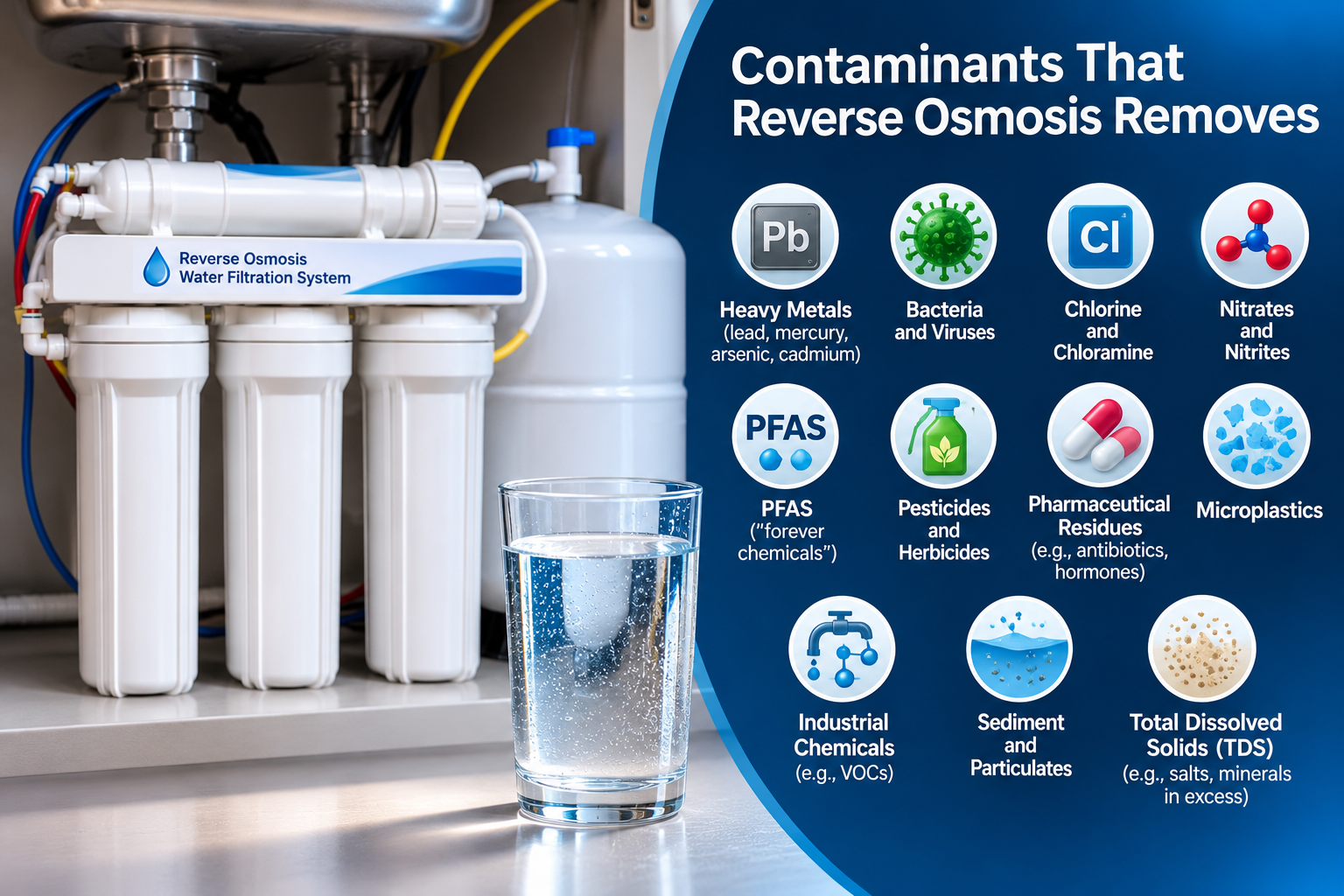
What contaminants does reverse osmosis remove?
Reverse osmosis can reduce many dissolved contaminants, including certain salts, metals, and other substances, but removal depends on the system, contaminant, and maintenance. Check the unit’s certified performance claims. The most useful next step is to understand what the equipment or process actually changes, what it cannot do, and how to verify that it fits the household situation.
Reverse Osmosis Filtration
Reverse osmosis can reduce many dissolved contaminants, including certain salts, metals, and other substances, but removal depends on the system, contaminant, and maintenance. Check the unit’s certified performance claims. Identify the actual concern and the intended outcome before comparing approaches.
An RO membrane separates water from many dissolved substances, but not every system is certified for the same contaminants. A household water test helps distinguish what is present from what a product is designed to reduce. Review relevant equipment specifications and limitations.
For households in the Phoenix Valley, match the solution to actual conditions. Ask what it addresses, how performance can be checked, and what routine attention it requires.
When considering reverse osmosis filtration, review the process, product documentation, and maintenance plan. If contaminants are involved, use appropriate testing and performance information. For equipment, verify that the configuration fits the home.
Dissolved Solids And Metals
Reverse osmosis can reduce many dissolved contaminants, including certain salts, metals, and other substances, but removal depends on the system, contaminant, and maintenance. Check the unit’s certified performance claims. Identify the actual concern and the intended outcome before comparing approaches.
An RO membrane separates water from many dissolved substances, but not every system is certified for the same contaminants. A household water test helps distinguish what is present from what a product is designed to reduce. Review relevant equipment specifications and limitations.
For households in the Phoenix Valley, match the solution to actual conditions. Ask what it addresses, how performance can be checked, and what routine attention it requires.
When considering dissolved solids and metals, review the process, product documentation, and maintenance plan. If contaminants are involved, use appropriate testing and performance information. For equipment, verify that the configuration fits the home.
Certified Contaminant Claims
Reverse osmosis can reduce many dissolved contaminants, including certain salts, metals, and other substances, but removal depends on the system, contaminant, and maintenance. Check the unit’s certified performance claims. Identify the actual concern and the intended outcome before comparing approaches.
An RO membrane separates water from many dissolved substances, but not every system is certified for the same contaminants. A household water test helps distinguish what is present from what a product is designed to reduce. Review relevant equipment specifications and limitations.
For households in the Phoenix Valley, match the solution to actual conditions. Ask what it addresses, how performance can be checked, and what routine attention it requires.
When considering certified contaminant claims, review the process, product documentation, and maintenance plan. If contaminants are involved, use appropriate testing and performance information. For equipment, verify that the configuration fits the home.
Pre-Filters And Upkeep
Reverse osmosis can reduce many dissolved contaminants, including certain salts, metals, and other substances, but removal depends on the system, contaminant, and maintenance. Check the unit’s certified performance claims. Identify the actual concern and the intended outcome before comparing approaches.
An RO membrane separates water from many dissolved substances, but not every system is certified for the same contaminants. A household water test helps distinguish what is present from what a product is designed to reduce. Review relevant equipment specifications and limitations.
For households in the Phoenix Valley, match the solution to actual conditions. Ask what it addresses, how performance can be checked, and what routine attention it requires.
When considering pre-filters and upkeep, review the process, product documentation, and maintenance plan. If contaminants are involved, use appropriate testing and performance information. For equipment, verify that the configuration fits the home.
FAQ
What should I check first?
Start with the specific concern, the condition of the source water, and the equipment instructions. Testing may be useful when a contaminant is involved.
Will every product work the same way?
No. Performance and suitability vary by design, installation, source conditions, and upkeep. Compare claims for the exact model rather than the product category.
Does maintenance matter?
Yes. Filters, settings, and other service requirements affect ongoing performance. Follow the manufacturer’s guidance and address unusual changes promptly.
When is professional help useful?
Professional guidance is useful when testing, plumbing modifications, specialized treatment, or uncertain performance makes the choice difficult.
What contaminants does reverse osmosis remove?
Reverse osmosis can reduce many dissolved contaminants, including certain salts, metals, and other substances, but removal depends on the system, contaminant, and maintenance. Check the unit’s certified performance claims. Review the specific conditions and the manufacturer’s guidance before choosing a system or changing your routine.
Conclusion
Reverse osmosis can reduce many dissolved contaminants, including certain salts, metals, and other substances, but removal depends on the system, contaminant, and maintenance. Check the unit’s certified performance claims. The best choice follows from understanding the actual problem and the limits of the proposed approach.