
What’s the average lifespan of a water softener?
A standard water softener typically lasts 10 to 15 years, although its actual lifespan depends on water hardness, household water usage, equipment quality, and regular maintenance. Some systems continue working beyond 15 years, while others develop performance problems sooner.
If you have a water softener in the Phoenix Valley, knowing what affects its lifespan can help you recognize declining performance and decide when professional service or replacement makes sense.
How Long Should a Water Softener Last?
Most traditional salt-based water softeners have an expected service life of approximately 10 to 15 years.
However, reaching that age doesn’t automatically mean your system needs replacement.
A 12-year-old water softener that receives regular maintenance may still work effectively, while a newer system with neglected maintenance could develop problems earlier.
The condition of the equipment, its capacity, and how frequently it operates all influence how long its components remain reliable.
What Affects the Lifespan of a Water Softener?
Water Hardness
Water softeners remove calcium and magnesium, the minerals responsible for hard water.
The harder your incoming water, the more minerals the system must remove.
Higher hardness levels can require more frequent regeneration, which is the process that restores the resin’s ability to treat water.
Frequent operation may increase wear on mechanical components over time.
Household Water Usage
A household that uses more water generally places greater demand on its softener.
Showers, laundry, dishwashing, and other daily activities contribute to the amount of water being treated.
When a system handles substantial water usage, it may regenerate more often. Proper sizing helps ensure the equipment can meet household demand without unnecessary regeneration cycles.
Equipment Quality
Water softeners contain several components that contribute to their performance.
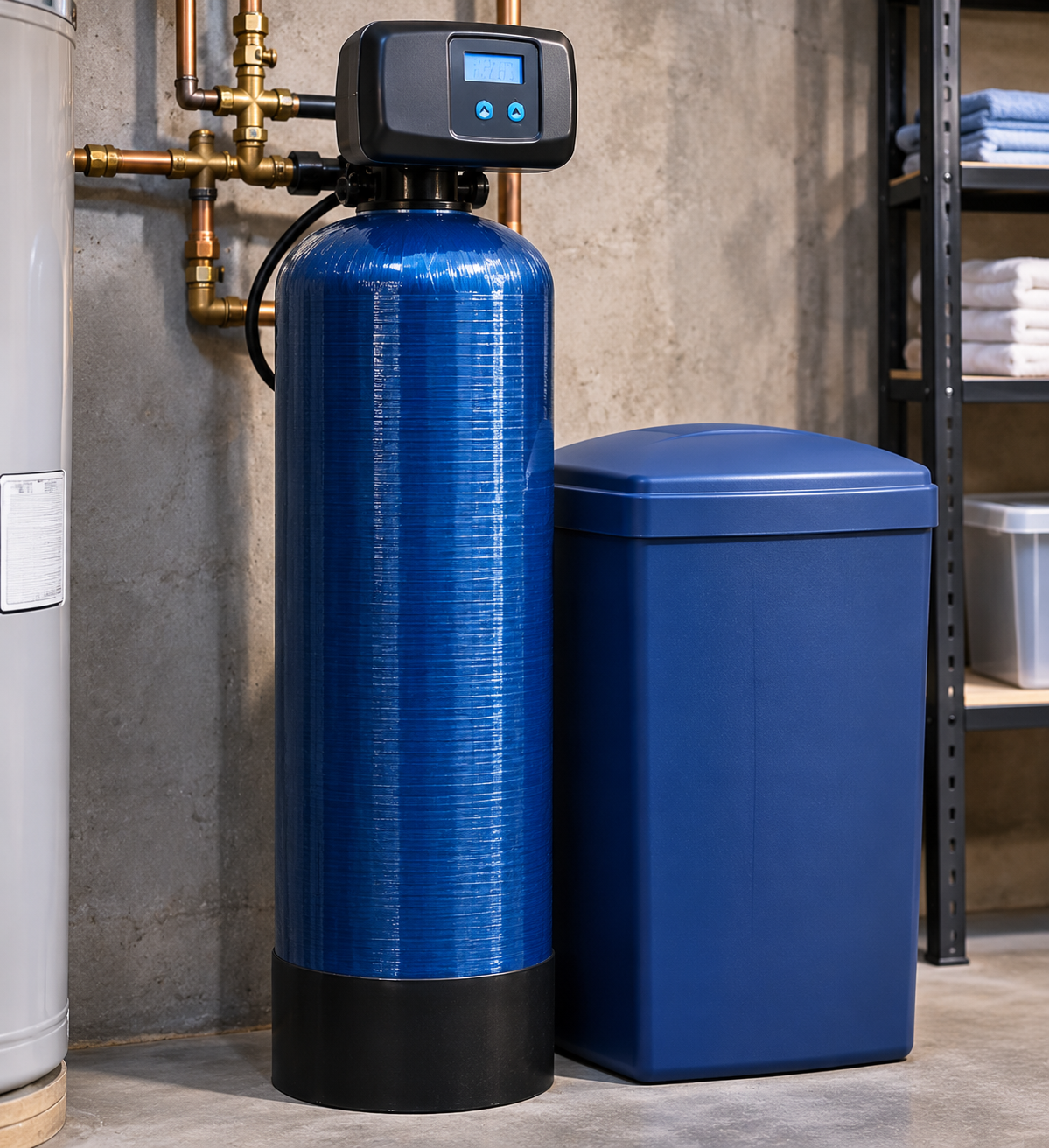
These include the mineral tank, resin, control valve, and brine system.
Component quality and system design influence durability. Individual parts may wear out at different rates, so one failing component doesn’t necessarily mean the entire softener has reached the end of its useful life.
Maintenance
Regular maintenance helps water softeners operate consistently.
For salt-based systems, this includes maintaining the manufacturer’s recommended salt level and following the prescribed maintenance schedule.
Professional service can also identify worn components, regeneration problems, or declining treatment performance before they lead to repeated operating issues.
What Are the Signs Your Water Softener Is Wearing Out?
An aging water softener may gradually become less effective at controlling hardness.
Common signs include:
- White mineral deposits returning to faucets and shower fixtures.
- Increased water spots on dishes and glassware.
- Soap becoming less effective or harder to rinse.
- Inconsistent softened water.
- Frequent service problems or repairs.
These symptoms may result from worn components, maintenance needs, or operating problems rather than complete system failure.
Professional evaluation can help identify the actual cause.
Should You Repair or Replace an Older Water Softener?
A water softener reaching 10 or 15 years old doesn’t automatically require replacement.
If the equipment still treats water effectively and needs only a manageable repair, continued service may be practical.
Replacement becomes more reasonable when performance remains unreliable, multiple components are deteriorating, or repairs become frequent.
A professional can assess the condition of the resin, control valve, and other system components while evaluating how effectively the softener removes hardness minerals.
That assessment helps determine whether continued service or replacement is more appropriate.
Frequently Asked Questions
What’s the average lifespan of a water softener?
A standard water softener typically lasts 10 to 15 years, although some systems can last longer with proper maintenance. Its lifespan depends on water hardness, household water usage, equipment quality, and regular maintenance.
Water softeners remove hardness minerals, primarily calcium and magnesium, through a process called ion exchange. Over time, components such as the resin, control valve, and seals can wear down or lose effectiveness.
Signs of an aging water softener include returning hard water spots, increased mineral buildup, inconsistent soft water, and frequent repairs. These symptoms don’t automatically mean the system needs replacement, but they can indicate declining performance.
Regular salt replenishment, manufacturer-recommended maintenance, and professional servicing can help extend the system’s useful life.
If your water softener is approaching 10 to 15 years old or is no longer working consistently, Mountain Fresh Water Systems can help evaluate its performance and determine whether service or replacement makes sense.
Can a water softener last longer than 15 years?
Yes. Some water softeners operate effectively beyond 15 years when properly maintained. Actual longevity depends on equipment quality, water conditions, household usage, and component wear.
Does hard water shorten a water softener’s lifespan?
Very hard water can increase a softener’s workload by requiring more frequent regeneration. The effect on lifespan depends on system capacity, operating conditions, and maintenance.
Does water softener resin wear out?
Yes. Resin can gradually lose effectiveness because of aging, fouling, or certain water conditions. Its condition can be evaluated separately from the rest of the equipment.
Is a 10-year-old water softener too old to repair?
No. A 10-year-old water softener may still be worth repairing if its other components are in good condition and the system continues providing effective water treatment.
Conclusion
A standard water softener generally lasts 10 to 15 years, but equipment age is only part of the decision. Water hardness, household demand, maintenance, and component condition all affect how long the system continues providing reliable softened water. Returning mineral buildup, inconsistent performance, and repeated repairs may indicate that professional attention is needed.